Brant Door & Opener Co.Service bulletin 1 of 3
Garage Door Roller Replacement: what the visit covers
Roller replacement changes the small wheels that guide each section of your garage door along its track.
Brantford, Ontario · Garage Doors · open 24/7
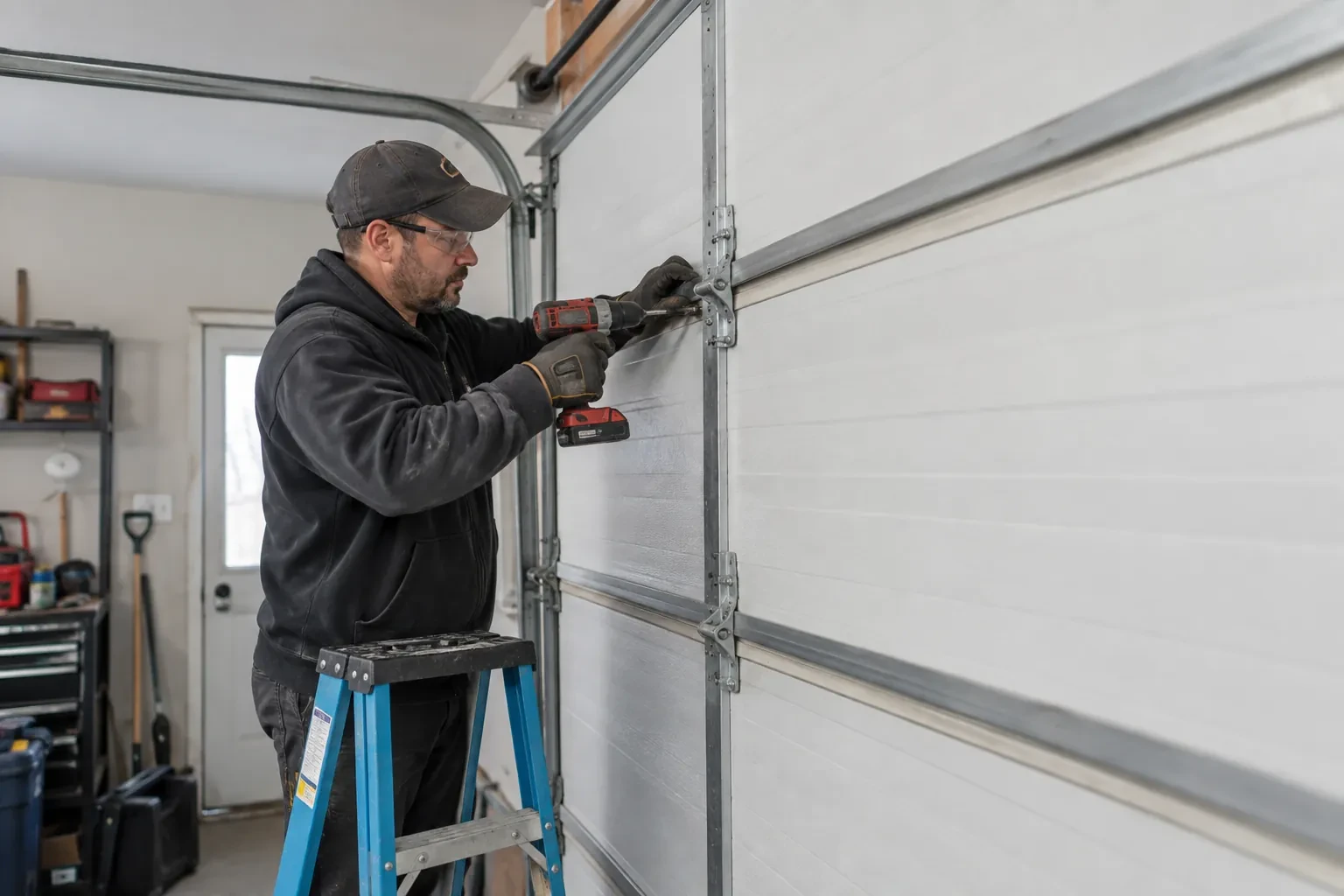
Roller replacement changes the small wheels that guide each section of your garage door along its track. A four-section residential door usually has ten of them: one at each end of the three hinge lines, one in each top fixture and one in each bottom bracket. Each is a wheel on a steel stem, commonly on ball bearings though some nylon rollers run bearingless, carrying a share of the door's weight more than a thousand times a year. When they wear, the door turns loud and rough. Fitting a matched set of new rollers, then checking the track and hinges they run in, brings back smooth and even travel.
The hardware the rollers live in
A roller is only as good as the bracket that holds it. The technician inspects every hinge for cracks at the knuckle, elongated holes and loose or missing fasteners, checks that the top fixtures still adjust and hold their setting, and looks over the bottom brackets for rust, deformation and the condition of the cable attachment. Jamb brackets and the flag brackets at the top of the vertical track are checked for movement. A door moves more than a thousand times a year and that vibration loosens bolts, so a hinge that has been working loose is often the reason a wheel wore crooked, and it is refastened or replaced as part of the same visit.
Lubricating the right parts, and not the wrong ones
Fresh rollers deserve the right lubricant in the right places. Roller stems and hinge knuckles get a light coat of the door manufacturer's specified lubricant, worked in by running the door a few times. The nylon tire itself is left dry, as is the inside of the track, because grease on those surfaces collects dust and grit that grind the wheel and let it slide instead of turn. Ball bearings are lubricated only where the roller's own maker calls for it, since some nylon rollers should not be greased at all. The technician wipes away any excess so nothing drips onto the car or the floor.
An opener with less to carry
With smooth rollers under the door, the opener goes back to its intended job of guiding a balanced door rather than hauling a rough one. The technician will have confirmed the force settings and the reversal against a test block before leaving, and it is worth repeating the reversal check yourself each month: lay a 1-1/2 inch block, such as a scrap of two-by-four laid flat, in the door's path and close it; the door should reverse on contact. If the opener ever begins straining or reversing partway again, mention it at the next visit, since it is often the earliest sign of hardware wear.