Emergency Repairs · Brantford
Off-Track Garage Door Reset
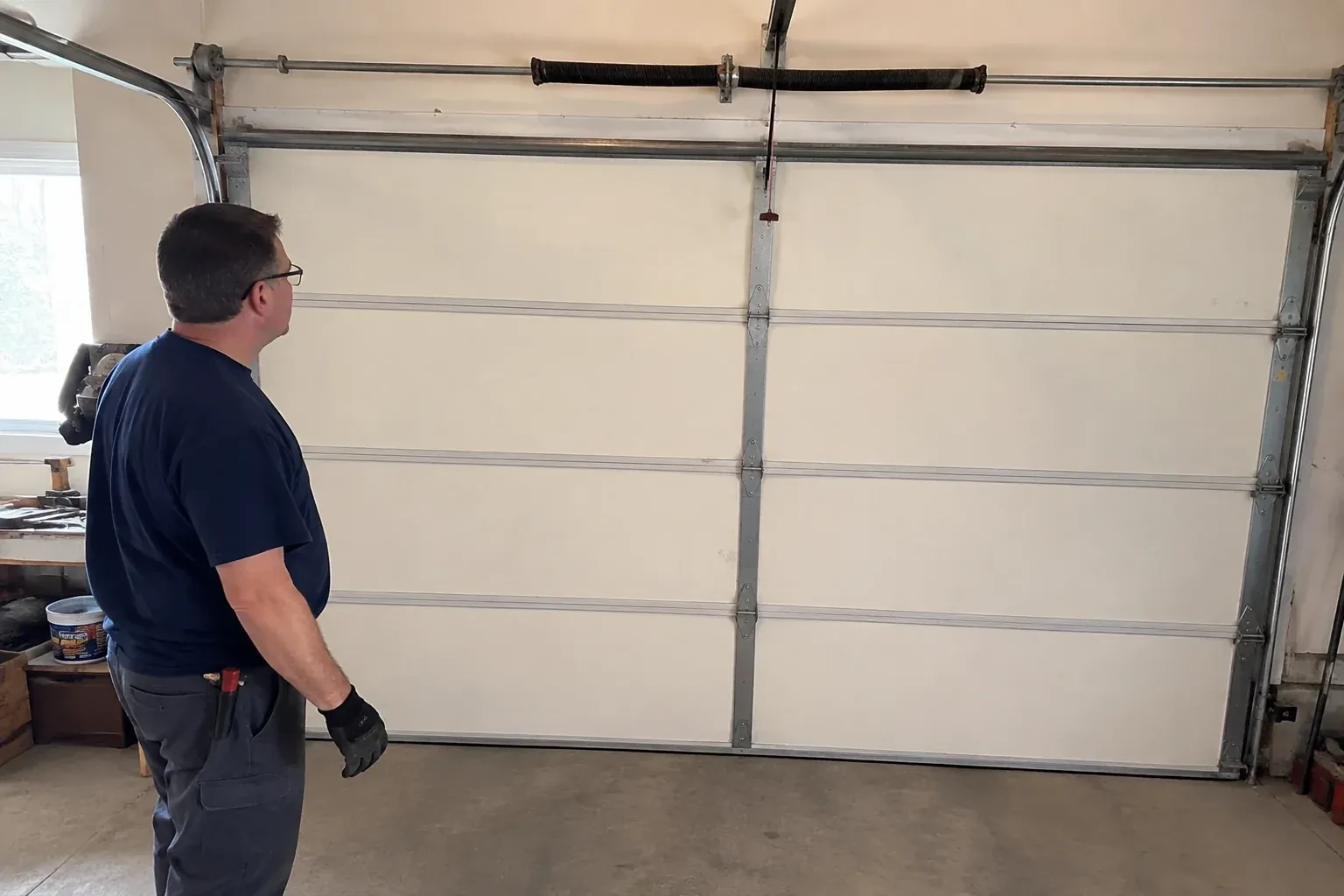
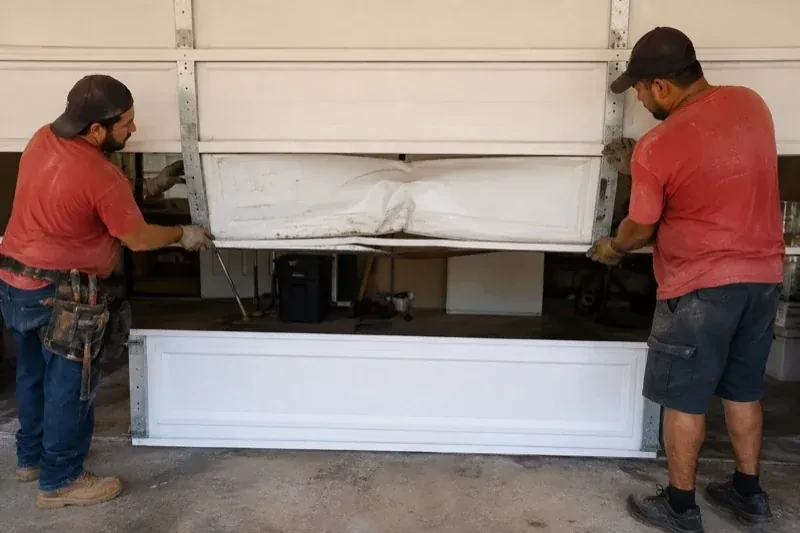
One side of the door hangs a hand's width lower than the other. A steel cable is drooping in a loop beside the track instead of running tight to the drum, and the whole door looks tilted in the opening.
Call now · open 24/7(226) 400-8435Right now
Before the door is looked at
Call (226) 400-8435, open 24/7.
Never run the opener on a door that is off its track or hanging crooked; every cycle drives the racked door harder into the rails and can pull the track from the wall or tear a hinge.
Pull the manual release only when the door is fully closed unless a technician asks otherwise; a door disconnected while partly open can move on its own if the springs are out of balance.
Use the lift handles or safe gripping points when a door must be moved by hand, never the gaps between sections, which close with real force.
In plain words
The reason to stop pressing the wall button is that an opener cannot tell a racked door from a heavy one. Each cycle drives the tilted sections harder into the rails, bending hinges, tearing the track from the jamb and stressing the cables that are already out of place. A reset begins by taking the opener out of the picture with the release cord and supporting the door where it sits. From that calm starting point the technician can re-seat rollers and cables in a controlled order, restore alignment and hand you back a door that the opener can move without fighting it.
How the visit goesThe rollers on the door have been squealing for months. Today one of them simply fell out of the track at the curve, its wheel worn down to the stem, and the top section sagged sideways as the door opened.
Off-Track Garage Door Reset · Brantford
How the visit goes
- 1
Making the door safe before anything is touched
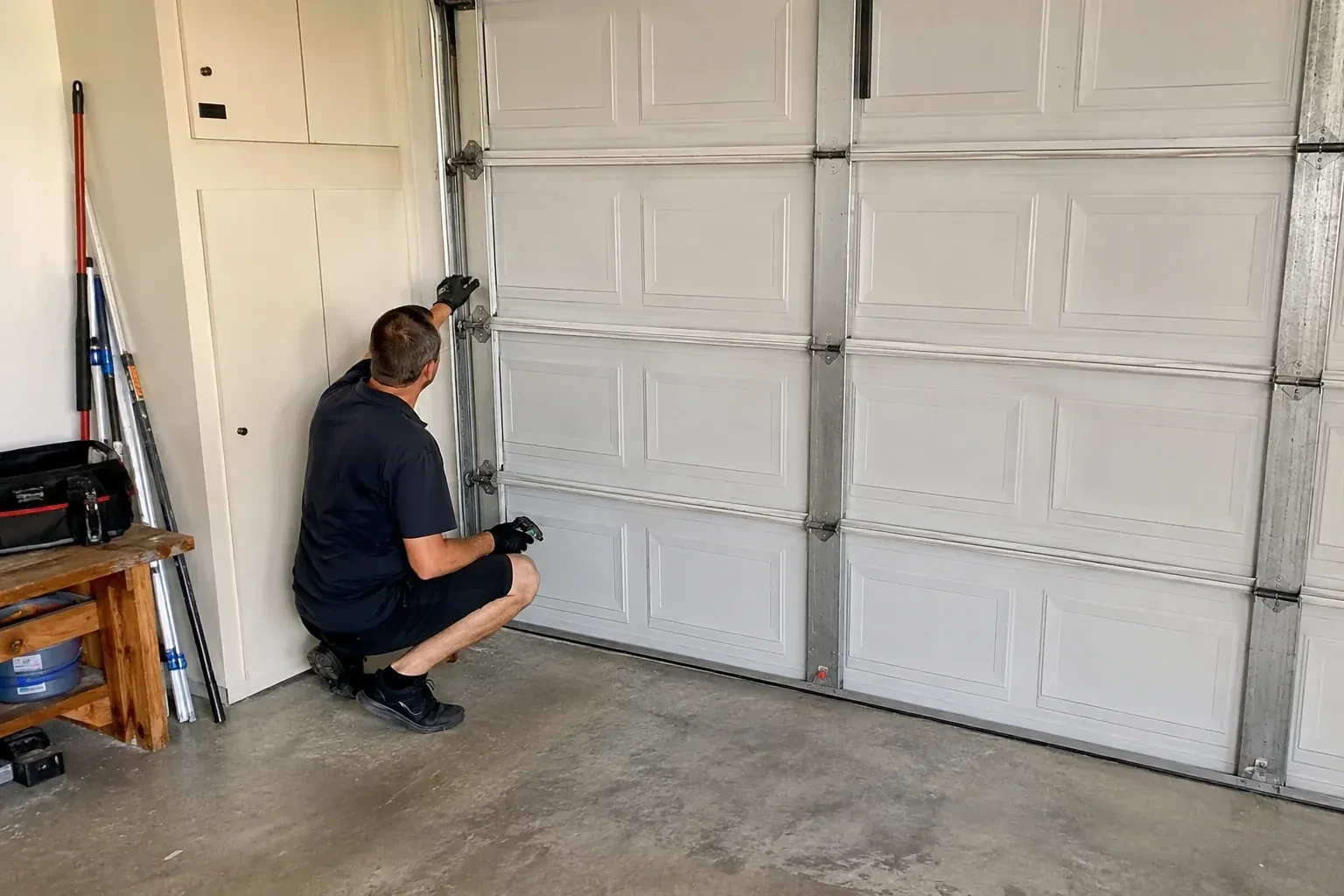
The first job is to stop the door doing anything unexpected. The technician clears people, pets and anything stored near the opening, unplugs the opener or pulls the release cord so the motor cannot be triggered from a remote, and looks at how the door is holding its position. Locking pliers go onto the track below the lowest roller and a support goes under a section that could drop. Only once the door is clamped and steady does the closer look begin. This takes a few minutes and it is what lets the rest of the visit proceed calmly rather than around a door that could shift.
- 2
Running the door by hand
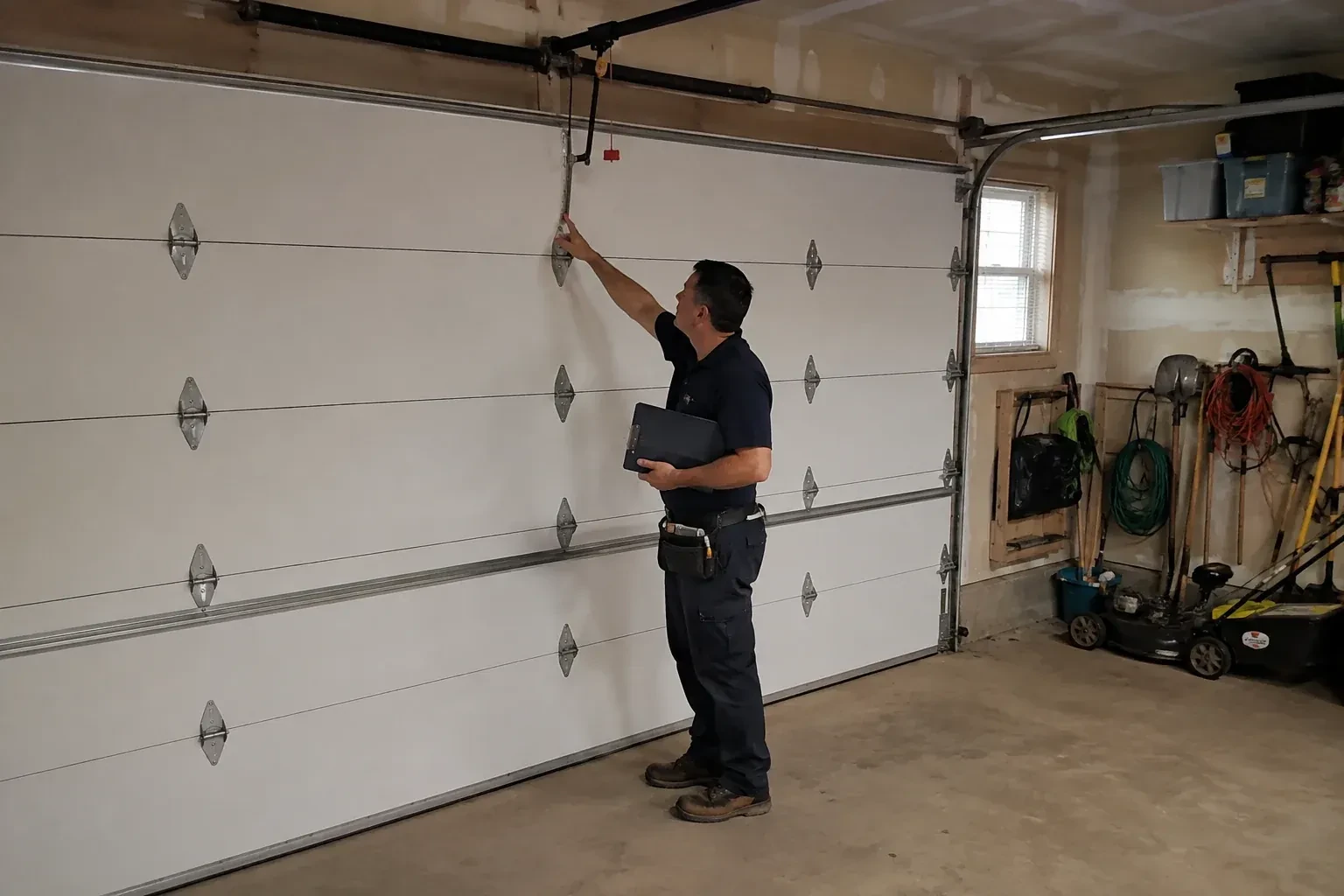
Before the opener comes back into the picture the door is proven manually. The clamps come off, the technician lifts the door slowly from the bottom, watching each roller pass through the curve and along the horizontal rail, and listening for any scrape that would mean a tight spot. At the halfway point the door is let go and should hold there with little drift. It is raised fully and must stay up. Then it is lowered and must close level along the floor. Any drag, sway or roller lift at this stage is fixed now, because the opener would only hide it until the next event.
- 3
Keeping the opener honest
The opener leaves the visit re-taught to the trued door, and a monthly test keeps it that way. Lay a piece of wood about 1.5 inches thick flat on the floor in the door's path and close the door from the wall button: it must touch the block and reverse. Then start the door closing again and pass an object through the photo-eye beam near the floor: it must stop and go back up. If either test fails, unhook the door from the opener and operate it by hand until it has been looked at. A door that reverses properly is one that stops before it can rack itself against an obstruction.
In the van
- Long lag screws or through-bolts
- Torsion spring winding bars
- Bottom brackets
- Locking pliers and track clamps
- Garage-door silicone lubricant
What affects the quote
- 1
Hinges, brackets and fixtures bent in the event
A twisted bottom bracket, a bent graduated hinge or a distorted top fixture is replaced rather than straightened. Each one is a small part but is priced and listed on its own so you see what was changed.
- 2
Whether the cables are involved
A cable that simply jumped its drum is rewound; one that is frayed or broken is replaced along with its partner, and the springs are unwound and rewound to do it. Each step is listed separately.
- 3
Time of the call
An evening, weekend or holiday visit to secure a door that will not close costs the same amount as a weekday appointment. The technician looks at how far the door has left its track before naming the figure, not at what time the call came in.
Same fees day, night or weekend.
Off-Track Garage Door Reset: questions
Can an off-track door fall?
A door with one cable slack and the springs still pulling on the other side is being held by parts that are not sharing the load, and it can shift or drop without warning, whether or not anyone touches it, if the second cable lets go or a roller gives way. That is why the visit begins with clamps on the track and support under the sections, and why people, pets and vehicles stay clear of the opening until that support is in place.
Should I lubricate the track to help the rollers?
No. The track is meant to be clean and dry; grease on the rail gathers dirt and makes the wheels slide rather than roll, which wears them faster and can contribute to a roller leaving the rail. Put a silicone spray made for garage doors, or a lithium grease, on the hinge pins, roller bearings and spring coils, wipe off the excess, and give the tracks nothing more than a damp cloth.
Will the opener need adjusting afterwards?
Sometimes, but not always. Once the door runs true by hand, the trolley is reconnected and the opener is checked against its own travel limits and force; those are only reset if that check shows they have drifted, since many openers need no force change after a repair like this. The reversal is then checked against a block laid in the door's path and by interrupting the photo eyes from a safe distance. If the opener strained hard during the event, its arm and bracket are checked too.
Repair & Maintenance
Bigger photo, sooner job: Emergency Book soon Plan ahead
Off-Track Garage Door Reset near you
Brant, Ontario
Brantford information
- Town
- Brantford, Brant, Ontario
- In business
- 14 years
- Hours
- Open 24/7 · nights, weekends and holidays, same fees
- Phone
- (226) 400-8435
- Visits
- On-site assessment preferred. Request a visit or call.
What the census means at the door
63%
Older homes. About 63% of homes in Brantford were built in 1980 or earlier, according to the 2021 Census.
In a mature neighbourhood the garage door is often the single largest feature of the front elevation, so keeping the original look matters. Modern insulated doors come in raised-panel and carriage styles that echo the older designs while running on today's torsion hardware.
61%
Mostly houses. Single-detached houses make up about 61% of homes in Brantford (2021 Census).
Family homes with their own garage tend to use it as the everyday entrance, so the door sees many cycles a week and the auto-reverse and photo-eyes matter for children and pets. We test both on every visit and set the force so the door stops on a light touch.
Open 24/7
Request a visit
One side of the door hangs a hand's width lower than the other.
Call now · open 24/7(226) 400-8435- On-site assessment preferred
- Same fees day, night or weekend
- 14 years in business